


How to Choose the Right Electric Toothbrush: A Complete Guide for Optimal Cleaning
Choosing an electric toothbrush is not simply a matter of comfort or modernity. It directly affects cleaning quality, the prevention of periodontal disease, and long-term oral health. According to several studies published in the Journal of Clinical Periodontology, using a suitable toothbrush can significantly reduce dental plaque and gum inflammation.
But how can you choose among the many available models? Between oscillating-rotating and sonic technologies, as well as differences in bristle design, the right choice also depends on your oral health profile: sensitive gums, dental implants, or periodontitis.
In this complete guide, we will explore:
- Electric toothbrush technologies and their clinical performance.
- The importance of bristle quality and softness.
- Brush head design: a key factor for effectiveness and precision.
- The central role of Edel White, a Swiss pioneer in sonic cleaning.
- Specific advice for people with periodontitis.
- A practical checklist to help you make the right choice.
Understanding the Different Electric Toothbrush Technologies
Manual vs. Oscillating-Rotating Electric vs. Sonic Electric vs. Bass Movement
Toothbrushes can be divided into four main categories:
| Type | Main movement | Frequency | Advantages | Limitations |
|---|---|---|---|---|
| Manual | Free movement | Variable | Affordable and widely available | Less consistent cleaning |
| Rotating (oscillating-rotating) | Alternating rotation | Approximately 7,000 movements/min | Effective against plaque | Can be too abrasive |
| Sonic | High-frequency vibrations | 30,000 to 60,000 vibrations/min | Deep cleaning and gentle on gums | Noise level |
| Bass movement (vertical) | Longitudinal micro-oscillation | Approximately 20,000 movements/min | Replicates the optimal manual brushing technique | Less widely available |
According to a meta-analysis published on ScienceDirect, sonic toothbrushes outperform rotating toothbrushes in reducing plaque and improving gum health, particularly thanks to their hydrodynamic effect.
Why Sonic Technology Is Superior
Sonic toothbrushes operate at a very high frequency, reaching up to 62,000 movements per minute. They do more than simply scrub the tooth surface: they create fluid turbulence and microbubbles in the mixture of saliva and toothpaste. This phenomenon, known as the hydrodynamic effect, can clean up to 4 mm beyond the bristles, reaching interdental areas and the gumline.
A study published on PubMed Central (PMC) showed a significant reduction in supragingival plaque and gum bleeding after 12 weeks of sonic toothbrush use compared with a rotating toothbrush.
In summary:
- Sonic technology uses high-frequency vibrations and cleaning fluid turbulence.
- It delivers superior clinical results for plaque removal, gum health, and user comfort.
- It is ideal for people with sensitive gums or dental implants.
Bristle Quality: An Essential Criterion
Hard, Soft, or Ultra-Soft Bristles — Which Should You Choose?
Bristles are just as important as the technology itself. Their firmness and shape directly influence the health of the enamel and gums.
| Bristle type | Advantages | Disadvantages |
|---|---|---|
| Hard | Strong cleaning performance | Risk of enamel abrasion and gum recession |
| Soft | Good balance between comfort and effectiveness | Less effective in hard-to-reach areas |
| Tapered ultra-soft | Gentle and deep cleaning | Lower cleaning performance |
According to a study published in the European Journal of Pediatric Dentistry (EJPD), toothbrushes with soft or ultra-soft bristles significantly reduce gum injuries while maintaining optimal cleaning effectiveness.
A Closer Look at Edel White Bristles
Edel White, a Swiss reference in oral care, has patented a tapered ultra-soft bristle technology with a firm base. This innovation combines several unique characteristics:
- A firmer base for improved transmission of sonic vibrations and optimal cleaning performance.
- Ultra-soft tips, as thin as 0.02 mm, for gentle gum cleaning and a wider cleaning range.
- The bristles absorb excess energy thanks to KONEX HD technology.
These innovative bristles deliver an exceptional brushing experience, combining optimal cleaning range, remarkable effectiveness, and outstanding gentleness. They are ideal for sensitive gums, dental implants, and people prone to periodontitis, providing deep cleaning without irritation.
Discover all Edel White electric toothbrush models at www.edelwhite.com
Brush Head Design: A Key Factor for Effectiveness and Precision
The shape of a toothbrush head has a much greater impact on cleaning than most people realize. Dental anatomy differs from one person to another. Interdental spaces vary, tooth angles differ, and some patients have veneers or implants that alter the structure of the mouth. The same principle applies as in household cleaning: you would not clean a sofa, the area under furniture, or a narrow corner with a single vacuum attachment. The mouth is no different. A single toothbrush head, whether manual or electric, cannot guarantee optimal access to every area.
This is even more relevant for people with veneers. Some contact areas become partially hidden, preventing the bristles from reaching them properly and reducing cleaning precision. Biofilm can then accumulate, develop into plaque and tartar, and contribute to gum inflammation and bad breath. Contrary to common belief, bad breath is not always linked to the stomach. In most cases, it results from an imbalance in the oral microbiome caused by inadequate cleaning in hard-to-reach areas. Digestive causes are generally secondary.
To limit these problems, specialists recommend using several brush head shapes to match the anatomical diversity of the mouth. Varying bristle volume, density, and softness helps optimize the cleaning of accessible surfaces, interdental spaces, and areas around veneers or implants. This is precisely why Edel White includes at least three different brush heads in every electric toothbrush set. The “Target” and “Focus” heads, for example, are designed to reach narrow areas, clean between the teeth, and access below the gumline, thereby helping to maintain a balanced oral microbiome.
Key points:
- One brush head is not enough to clean every mouth — or even every area within the same mouth.
- Missed areas are where plaque, tartar, and bad breath develop.
- Alternating between several brush head shapes is one of the simplest and most effective ways to improve cleaning quality.
A Closer Look at Edel White — Number One in Cleaning Performance
Swiss Expertise in Oral Care
For more than 20 years, Edel White has established itself as a reference in premium sonic technology. Developed in Switzerland, the brand combines clinical research, mechanical innovation, and ergonomic design.
The strength of Edel White electric toothbrushes is based on three essential principles: advanced sonic technology, world-unique bristles that absorb pressure while increasing cleaning range, and a variety of brush head shapes in every set to clean all areas of the mouth effectively. As the only toothbrushes combining these three innovations, Edel White models are regularly recognized among the best electric toothbrushes for cleaning performance while remaining exceptionally gentle on the gums.
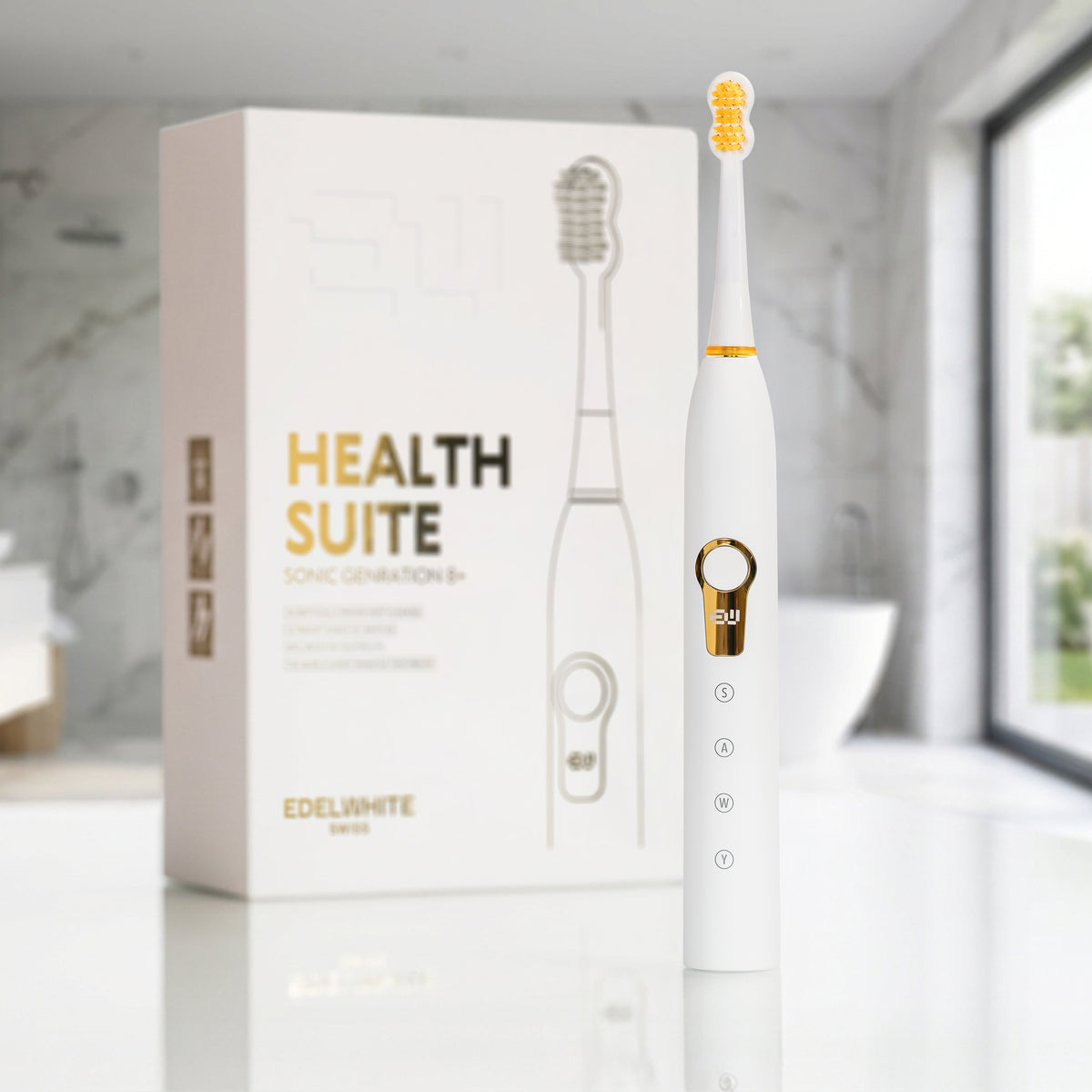
Our Sonic Generation 8 Health+ model, featuring greater power and optimized battery life, is considered the “Rolls-Royce” of electric toothbrushes. It is an essential ally for people with gingivitis or periodontitis, or for anyone who simply wants the very best for cleaner, healthier, and naturally whiter teeth.
Benefits of the Sonic Generation 8 Health+
- Advanced sonic technology: up to 45,000 movements per minute for deep cleaning.
- Patented ultra-soft bristles: irritation-free cleaning, ideal for sensitive gums.
- Interchangeable heads for different needs: for the feeling of a professional dental cleaning at home, without pain.
- Lightweight and ergonomic design.
- Extended battery life of up to 40 days and magnetic USB charging.
To learn more or place an order, visit the official website: www.edelwhite.com
Special Case: Which Toothbrush Should You Choose If You Have Periodontitis?
Periodontitis is a chronic inflammatory disease affecting the tissues that support the teeth. It requires rigorous oral hygiene, but above all, a gentle approach. An unsuitable toothbrush can worsen gum recession or disrupt the oral microbiome.
Clinical Recommendations
- Sonic toothbrushes can help reduce periodontal pocket depth.
- Tapered ultra-soft bristles provide effective cleaning without tissue trauma.
- Specialized heads, such as single-brush and pro-gums heads, improve access to hard-to-reach areas.
In its 2023 report, the Swiss Dental Hygiene Council (SHDC) stated that daily use of a sonic toothbrush improves periodontal health by reducing the subgingival bacterial load.
Edel White Solutions for Periodontitis
Edel White offers several specialized brush heads:
- Single Brush: for precise cleaning around tooth necks and implants.
- Pro-Gums: to massage and stimulate the gums without causing injury.
- Implant Care: for cleaning peri-implant areas.
These heads, compatible with the Sonic Generation 8 Health+, provide customized care for every oral health profile. Discover them at www.edelwhite.com
Checklist – 10 Key Points for Choosing the Right Electric Toothbrush
- Sonic technology: choose a high-frequency model for hydrodynamic action.
- Ultra-soft bristles: gentle and effective cleaning without abrasion.
- Adjustable power: ideal for adapting to gum sensitivity.
- Interchangeable heads in different sizes: suitable for different needs.
- Ergonomics and design: a comfortable grip improves brushing quality.
- Battery life: at least 30 days of use per charge.
- Smart timer: to follow the recommended two-minute brushing time.
- Clinical validation: supported by studies or recommended by dentists.
- Pressure sensor or bristles designed to absorb excess pressure.
- Brand reputation: choose a recognized reference such as Edel White.
Conclusion
Choosing the right electric toothbrush is not simply a matter of comfort: it is a major factor in maintaining good oral health. Thanks to their hydrodynamic effect and the combined action of ultra-soft, pressure-absorbing bristles, sonic technologies remove plaque consistently, including in hard-to-reach areas, while preserving gum tissue integrity.
Edel White fully embraces this scientific approach by combining Swiss engineering, patented bristles, and differentiated brush heads designed to match the anatomical variations of every mouth. Its Sonic Generation 8 Health+ model, recognized for its controlled power and clinical effectiveness, is now a leading choice for demanding users, including those with gingivitis or periodontitis.
By combining performance, precision, and respect for the oral microbiome, Edel White perfectly illustrates what a modern electric toothbrush should be: a true preventive care tool serving long-term oral health.