



Gingivitis: symptoms, causes and how long it takes to heal
|
Key takeaways in one minute
|
If your gums bleed when you floss, the natural reflex is to stop flossing. It feels like the kind thing to do for a sore spot. In reality, that reflex is one of the main reasons gingivitis lingers for months when it could often settle within a couple of weeks.
Gingivitis is the body's predictable response to plaque left too long at the gum line, not a sign of "weak gums" or bad luck. Remove that plaque every day, with the right tools and a light touch, and the gums calm down. Ignore it, and in susceptible people the inflammation can slowly move deeper.
The stakes are real. The World Health Organization estimates that severe periodontal disease accounts for more than 1 billion cases worldwide, with poor oral hygiene and tobacco use as its main risk factors. The European Federation of Periodontology (EFP) estimates that around 70% of tooth loss among adults is caused by periodontitis. That story almost always starts with gingivitis, the one stage you can still erase.
What is gingivitis?
Gingivitis is inflammation of the gingiva (the gums), triggered in the vast majority of cases by dental plaque building up along the gum margin. It stays confined to the gum tissue: the bone and periodontal ligament that anchor each tooth remain intact.
Plaque is not leftover food. It is a biofilm, a structured community of bacteria that sticks to the teeth and shelters inside a protective matrix it produces itself. Rinsing cannot detach it; only mechanical cleaning, with a toothbrush, interdental brush or floss, breaks it up.
Think of your mouth as a garden to tend rather than a surface to sterilise. Trouble starts when the biofilm is left undisturbed for days: it thickens, its make-up shifts and the immune system responds. The gum swells, reddens and bleeds at the slightest touch. That visible defence reaction is gingivitis.
The 2017 international classification separates plaque-induced gingivitis, by far the most common and the subject of this guide, from non-plaque-induced gingival conditions (infections, mucosal diseases such as lichen planus, allergies, injuries), which need a professional diagnosis. Gingivitis can also occur in people already treated for periodontitis; it is managed the same way, with closer monitoring.
Can gingivitis be reversed?
Yes, completely. Once plaque is removed thoroughly and regularly, the gums regain their normal colour, shape and firmness without lasting damage. That is the fundamental difference from periodontitis.
The proof comes from one of dentistry's best-known experiments. In 1965, Harald Löe and his colleagues asked 12 healthy young volunteers with clean teeth and normal gums to stop all oral hygiene. The time needed for gingivitis to develop varied between 10 and 21 days. When good oral hygiene was reintroduced, the original sparse bacterial flora returned and the inflamed gums reverted to normal.
Two lessons follow. Plaque is the trigger: remove it and the inflammation fades. And everyone reacts at their own pace, so comparing your gums with someone else's is not very useful.
|
The key point Gingivitis means inflamed gums with the tooth's attachment still intact. It is the last stage at which everything can return exactly to how it was. Acting now protects the supporting bone for years to come. |
What are the symptoms of gingivitis?
The typical symptoms of gingivitis are red, swollen, shiny gums that bleed when you brush or clean between your teeth. It is rarely painful, which is exactly why so many people put up with it. Bad breath or an unpleasant taste often comes with it.
| What to check | Healthy gums | Gingivitis |
|---|---|---|
| Colour | Pale pink (naturally darker in people with more pigmented gums) | Bright red to purplish, especially at the margin |
| Shape | Thin margin, pointed papillae filling the gaps between teeth | Thickened margin, rounded and puffy papillae |
| Texture | Firm, sometimes stippled like orange peel | Soft, smooth, shiny |
| Bleeding | None when brushing or cleaning between teeth | When brushing or flossing, sometimes when eating |
| Comfort | No pain | Tenderness rather than pain |
Swollen gums that bleed: why bleeding matters most
Bleeding is the most reliable early marker of gingivitis. In the case definition proposed for the 2017 classification, a patient with an intact periodontium has gingivitis when 10% or more of the sites examined bleed on probing: localised between 10% and 30%, generalised above 30%. Healthy gums do not bleed when cleaned properly, so regular bleeding, even slight, is never "normal".
One trap: in smokers this warning sign is often muted. Tobacco narrows the small blood vessels in the gums, which bleed less even when inflammation is present. A smoker's gums that do not bleed are not necessarily healthy.
What causes gingivitis?
The cause of gingivitis is dental plaque left against the gums for too long. Other factors cannot cause it on their own, but they make the gums react more strongly or make plaque harder to remove.
Plaque reforms every day. It is harmless when removed regularly and becomes a problem where it is easy to miss: between the teeth, where no toothbrush reaches; in the gingival sulcus, the shallow groove where gum meets tooth; behind the last molars; and around crowded teeth, crowns, bridges and braces. Over time it mineralises into tartar (calculus), whose rough surface holds even more plaque. No toothbrush can remove tartar; only a dentist or dental hygienist can.
What makes inflamed gums worse?
The 2017 classification lists several factors that modify plaque-induced gingivitis.
| Factor | What happens | What you can do |
|---|---|---|
| Hormonal changes (puberty, pregnancy, hormonal contraception) | Gums react more strongly to the same plaque | Be extra thorough and book a check-up |
| Smoking | Inflammation masked, higher periodontitis risk | Consider stopping, with support from your doctor or pharmacist |
| Poorly controlled diabetes | High blood sugar sustains inflammation | Work on glucose control, have your gums checked |
| Some medicines (e.g. phenytoin, ciclosporin, some calcium channel blockers) | Gums can thicken and trap plaque | Never stop a medicine yourself; talk to your doctor and dentist |
| Dry mouth, mouth breathing | Less protective saliva | Treat the cause, drink water regularly |
| Overhanging fillings, braces, crowded teeth | Plaque traps that are hard to reach | Interdental or single-tuft brushes, adjustment by the dentist |
Pregnancy gingivitis
Pregnancy gingivitis is gum inflammation made more likely by the hormonal changes of pregnancy. A 2013 systematic review found that gum inflammation was significantly greater in the second and third trimesters than in the first, and greater than in women who were not pregnant.
Hormones make the gums more reactive to plaque already there, so careful daily cleaning makes a real difference. Occasionally a small, very vascular overgrowth of gum appears (a pregnancy epulis). It is benign and often shrinks after the birth, but should be shown to a dentist.
Many countries offer free or subsidised dental care during and after pregnancy, but schemes vary widely, so ask your midwife, doctor or dental practice what is available where you live. The links between periodontitis (not simple gingivitis) and pregnancy outcomes are covered in our guide to periodontitis and general health.
Gingivitis or periodontitis: what is the difference?
Gingivitis affects only the gums and heals without trace. Periodontitis reaches the ligament and bone, creates pockets between gum and tooth and leaves permanent damage. Every periodontitis begins as gingivitis, but not every gingivitis becomes periodontitis.
| What differs | Gingivitis | Periodontitis |
|---|---|---|
| Tissues affected | Gums only | Gums, ligament and supporting bone |
| Reversible? | Fully | Can be stabilised; lost bone does not grow back by itself |
| Pockets | No true pocket (swelling can create a "false pocket") | Periodontal pockets from loss of attachment |
| Diagnosis | Bleeding on probing, no attachment loss | Pocket probing, attachment loss, X-rays |
| Management | Thorough home care plus a professional clean | Deep cleaning by a dentist or periodontist, then lifelong follow-up |
Susceptibility varies: smoking, poorly controlled diabetes and genetics leave some people far more vulnerable. Since nobody knows in advance which group they belong to, the rule is simple: never let gingivitis settle in. As the SSO, the association of Swiss dentists, warns in its patient advice, gum inflammation that is not stopped can develop into periodontitis.
For the next stage and how it is staged and graded, read our complete guide to periodontitis.
How long does gingivitis take to heal?
Simple gingivitis usually starts to improve within the first few days of thorough daily cleaning, and the gums are often clearly calmer within one to two weeks. Treat that as a rough guide, not a promise: it depends on how inflamed the gums are, whether tartar is present and which aggravating factors apply.
No study sets a healing time that applies to everyone. What is well established is that inflammation follows plaque: once the biofilm is removed daily, the gums start to recover.
| Timeline (rough guide) | What you may notice | What to do |
|---|---|---|
| First few days | Bleeding may seem more obvious as you restart interdental cleaning | Keep going gently: this is expected |
| End of week one | Less frequent bleeding, less tenderness | Stick to the routine |
| After two weeks | Firmer, paler gums, little or no bleeding | Still bleeding? Book a dental appointment |
| Long term | Stable gums as long as the routine holds | Check-ups at the interval your dentist advises |
Healing takes longer when tartar is present (it keeps the gums inflamed until removed), when you smoke, when diabetes is poorly controlled, during pregnancy, or when the spaces between the teeth are skipped, which is the most common gap in a routine.
|
Still bleeding after two weeks? That is not a personal failure. It means a professional needs to look: tartar below the gum line, early periodontitis or another cause. See your dentist or dental hygienist rather than trying yet another product. |
Gingivitis treatment at home: a step-by-step plan
Gingivitis treatment rests on one principle: remove plaque every day, everywhere, without hurting the gums. A professional clean completes the job when tartar is present.
The European consensus on managing gingivitis, published in 2015 by an EFP workshop, supports brushing twice a day for at least two minutes with a fluoride toothpaste and, for people with gingivitis, cleaning between the teeth once a day. National advice follows the same lines. The American Dental Association recommends a soft-bristled toothbrush for two minutes twice a day. In the UK, the national prevention toolkit advises people with gum disease to clean between their teeth daily, to just below the gum line, before brushing.
Step 1: clean between your teeth every day, before brushing
This is the step that changes everything, because gingivitis very often starts between the teeth. The EFP recommends interdental brushes, with floss where the gaps are too small, and the SSO notes that interdental brushes clean best and are easier to use than floss. A 2019 Cochrane review (35 trials, 3,929 adults) found low-certainty evidence that flossing in addition to brushing may reduce gingivitis at one month; evidence for interdental brushes pointed the same way but was of very low certainty, as few trials exist.
The right interdental brush slides in without forcing but rubs lightly against both teeth. Our guide on how to choose the right interdental brush size shows you how to find it.
Step 2: brush for two minutes, aiming at the gum line
Angle the bristles at roughly 45 degrees towards the gums and use small, gentle movements, tooth by tooth, without scrubbing. The aim is to lift plaque out of the sulcus, not to scour the gum. Every movement is explained in how to brush your teeth properly. Afterwards, spit out the toothpaste rather than rinsing: the UK toolkit recommends this so the fluoride stays on the teeth, and advises 1,350 to 1,500 ppm fluoride for adults.
Step 3: choose a soft toothbrush, manual or electric
Inflamed gums are fragile. Hard bristles or heavy pressure irritate them without cleaning any better. A power toothbrush can help: a 2014 Cochrane review (56 studies, 5,068 participants) found that powered brushes reduced gingivitis by 6% after one to three months and by 11% after more than three months compared with manual brushes. The 2015 European consensus calls the benefit of rechargeable power toothbrushes "small but statistically significant". See our guide on how to choose the right electric toothbrush.
Step 4: do not stop when your gums bleed
This is the most persistent myth. Bleeding comes from inflammation, and inflammation comes from plaque. Keep going, gently; the bleeding fades as the swelling goes down.
Step 5: deal with tartar and aggravating factors
If you can see tartar (a yellowish or brown deposit at the gum line, often behind the lower front teeth), book a professional clean: no routine will remove it. The SSO notes that dental hygiene visits may be needed once or several times a year depending on your situation. Meanwhile, address what slows healing: smoking, poorly controlled diabetes, a dry mouth, and a diet short on fruit and vegetables.
To fit these steps into a simple morning and evening sequence, follow our step-by-step oral hygiene routine.
Does mouthwash help with gingivitis?
A mouthwash can help, but it never replaces brushing and interdental cleaning. Chlorhexidine is used as a short course, alongside mechanical cleaning, when inflammation is marked or on a dentist's advice.
A 2017 Cochrane review (51 studies, 5,345 participants) concluded, with high-quality evidence, that after four to six weeks chlorhexidine reduced the gingival index by 0.21 points on a 0 to 3 scale in people who started with mild inflammation. The effect is real but modest, and rinsing for four weeks or longer stains the teeth.
Three rules follow: use chlorhexidine as a short course only, always as an extra to mechanical cleaning (an antiseptic cannot get through a thick biofilm), and not for children without medical advice. Our guide to choosing a mouthwash compares chlorhexidine, fluoride and everyday alcohol-free formulas.
When should you see a dentist about gingivitis?
See your dentist or dental hygienist if bleeding persists after two weeks of thorough cleaning, if you can see tartar, or if your symptoms go beyond red, swollen gums. Even without symptoms, keep to the check-ups your dentist recommends.
|
When to seek care promptly
|
The examination is simple: gentle probing to check for pockets, X-rays if needed, then a professional clean and personalised advice. Prevention schemes and the funding of gum care differ greatly between countries. In Switzerland, for instance, basic health insurance generally covers dental treatment only when linked to a severe, unavoidable disease of the chewing system or a serious general illness. Ask your practice or insurer what applies to you.
Which toothbrush is best for gingivitis?
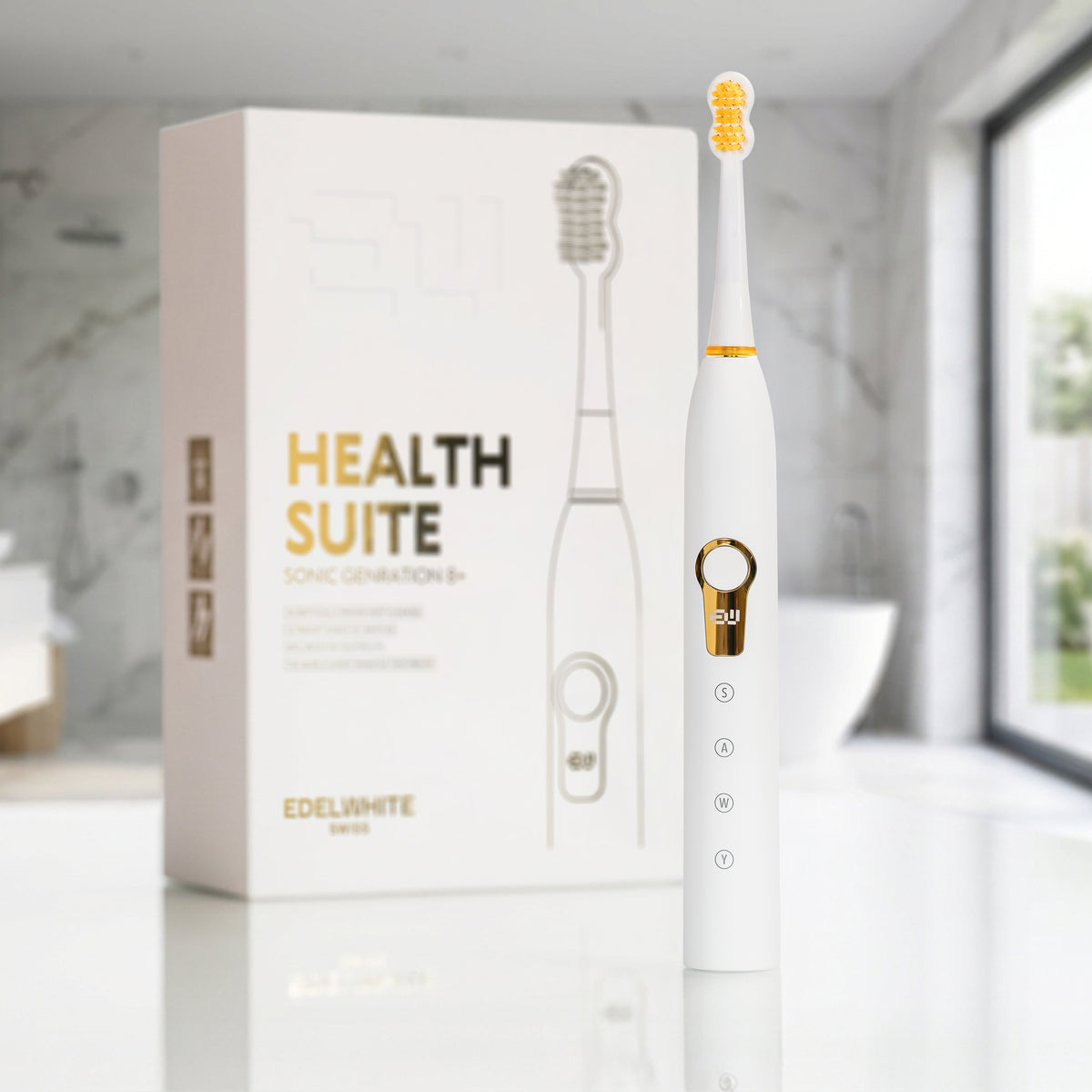
For gingivitis, choose soft bristles that reach into the gingival sulcus without irritating inflamed gums, and pair them with an interdental tool that fits your gaps. Manual or electric, regular and gentle use matters most.
Two features matter for swollen gums: fine bristle tips, which slip into the groove where gingivitis starts, and pressure control. Our article on the best electric toothbrush for periodontitis and gingivitis compares the options in depth.
|
The EDELWHITE approach EDELWHITE, the Swiss brand specialising in gum health, designs its tools for gums that need a thorough clean without being harmed. They do not replace professional care; they help you keep your routine every day.
Explore the full range in our periodontal and gingivitis care collection. |
Frequently asked questions
Can gingivitis go away on its own?
Gingivitis does not go away on its own while plaque stays in place, because plaque keeps the gums inflamed. It clears up without heavy treatment once plaque is removed every day: two minutes of brushing twice a day, daily interdental cleaning and, if tartar is present, a professional clean. The gums then return to full health.
How long does gingivitis take to heal?
With thorough daily brushing and interdental cleaning, gingivitis usually begins to improve within a few days, and the gums are often clearly calmer within one to two weeks. This is a rough guide, not a guarantee: tartar, smoking, pregnancy or diabetes can slow things down. If your gums still bleed after two weeks of careful cleaning, see your dentist or dental hygienist.
Should I stop brushing if my gums bleed?
No. Bleeding gums are caused by inflammation, and that inflammation is fed by plaque. Stopping lets plaque build up and makes gingivitis worse. Keep brushing with a soft toothbrush angled gently towards the gum line and clean between your teeth every day. The bleeding usually fades as the gums heal; if it persists after two weeks, book a dental check.
How can I tell gingivitis from periodontitis?
Only a dental examination can tell for sure, using gentle probing and X-rays where needed. Some signs point towards periodontitis: gums pulling back, teeth that look longer, widening gaps, a loose tooth or persistent bad breath. Gingivitis is limited to red, swollen gums that bleed, with no loss of the attachment that holds the tooth in place.
Is gingivitis contagious?
Gingivitis is not considered contagious in the usual sense. Mouth bacteria can pass between people through saliva, but gingivitis develops when plaque builds up in a particular person's mouth and their gums react to it. Your own daily cleaning and risk factors matter most, though sharing a toothbrush is still best avoided.
Does gingivitis hurt?
Gingivitis is rarely painful, which is why it is so easy to ignore. It usually shows up as tender, red, swollen gums that bleed when brushed. Sharp pain, ulcers on the gums, very strong breath or fever are not typical of simple gingivitis: they can point to a necrotising form of gum disease and call for a prompt dental appointment.
Does pregnancy gingivitis go away after giving birth?
Pregnancy gingivitis often eases after the birth as hormone levels settle, but it only truly resolves if plaque is well controlled; careful daily cleaning limits it considerably. Many countries offer free or subsidised dental check-ups during and after pregnancy, so ask your midwife, doctor or dental practice what is available locally.
What is the best mouthwash for gingivitis?
When inflammation is marked, a chlorhexidine mouthwash can be used as a short course alongside brushing and interdental cleaning, ideally on your dentist's advice. A 2017 Cochrane review found a real but modest benefit after four to six weeks, and rinsing for four weeks or longer stains teeth. No mouthwash replaces the mechanical removal of plaque.
Can a water flosser help with gingivitis?
A water flosser can be a helpful addition, particularly around bridges, implants or braces. A 2019 Cochrane review found very low-certainty evidence that oral irrigators may reduce gingivitis at one month when added to toothbrushing. Use it alongside interdental brushes or floss rather than instead of them.
Further reading
- Periodontitis: symptoms, stages, causes (the complete guide)
- What is the best electric toothbrush for preventing and combating periodontitis and gingivitis?
This article is for information only and does not replace the advice of a dentist or periodontist.