


|
Key takeaways
|
Many people who switch to an electric toothbrush soon start wondering whether they also need a water flosser. Others hesitate between the two. It is one of the questions we hear most often, especially from people whose gums bleed when they brush.
In short: the electric toothbrush is the foundation of your routine, and a water flosser earns its place wherever your toothbrush cannot reach. This guide explains what each device does, why the water flosser comes after brushing and which combination suits your situation. It is written by EDELWHITE, the Swiss oral care brand dedicated to gum health.
Do you need a water flosser if you have an electric toothbrush?
Not necessarily, but in many cases it makes a real difference. An electric toothbrush cleans the outer, inner and chewing surfaces of your teeth very effectively. What it cannot do well is clean the surfaces where two teeth meet. Those tight spaces are where plaque builds up most easily, and where gum inflammation often begins.
That is why dental professionals advise cleaning between your teeth once a day, in addition to brushing twice a day. A water flosser is one of the simplest ways to do it: used straight after brushing, its pulsating stream works like a miniature pressure washer. It flushes out the bacteria and debris your toothbrush has loosened but cannot remove, including around implants, under bridges and around braces.
Its value is well established: a meta-analysis of 22 clinical trials, published in the Journal of Periodontology in 2018, ranked water flossers, alongside interdental brushes, among the most effective methods for reducing gum bleeding.
|
The short answer An electric toothbrush is essential; a water flosser is an add-on. If you currently do nothing to clean between your teeth, adding a water flosser is one of the simplest ways to close that gap. |
What is a water flosser, and how does it differ from an electric toothbrush?
A water flosser, also called an oral irrigator, directs a thin, pulsating stream of water between the teeth and along the gumline. The pulses flush out food debris and loosely attached plaque, including from the small groove between the tooth and the gum, known as the sulcus. An electric toothbrush works differently: its vibrating bristles physically scrub plaque off the tooth surface.
| Electric toothbrush | Water flosser | |
|---|---|---|
| Main job | Removes plaque from tooth surfaces | Cleans between teeth and along the gumline |
| Areas it reaches best | Outer, inner and chewing surfaces, and the gum margin | Spaces between teeth, the gumline groove, around implants, under bridges and around braces |
| Best-documented benefit | Less plaque and gingivitis than with a manual toothbrush | Less gum bleeding when added to brushing |
| What it cannot do | Clean thoroughly between the teeth | Replace brushing or remove tartar |
| How often | Two minutes, morning and evening | Once a day, in the evening after brushing |
| Use with | Fluoride toothpaste | Lukewarm water |
Why use your water flosser after brushing?
At EDELWHITE, we recommend using your water flosser after brushing, never instead of it. The order matters:
- Your electric toothbrush loosens plaque from the tooth surfaces and breaks up the biofilm, the layer of bacteria that forms again every day.
- The water flosser then takes over: its pulsating stream flushes out what the brush has loosened and drives out the bacteria still trapped between the teeth and under the gum margin.
- It reaches a gumline groove where the bacterial layer has just been weakened by brushing, which makes the bacteria easier to dislodge.
What about interdental brushes? Use them first, wherever they fit: they mechanically remove plaque between the teeth, and brushing followed by the water flosser finishes the job. A water flosser does not replace them; it complements them.
Your complete morning and evening routine
Here is the routine we recommend with an electric toothbrush and a water flosser. It takes about five minutes in the evening and two minutes in the morning.
Evening: the full routine, in about five minutes
- Interdental brushes where they fit (one minute): pass gently through each space without forcing. Your dentist or hygienist can tell you which sizes to use.
- Electric toothbrush (two minutes): a pea-sized amount of fluoride toothpaste, 30 seconds per quarter of your mouth, with the brush head angled towards the gumline. Do not press or scrub: simply guide the brush from tooth to tooth. Then spit out the toothpaste without rinsing with water.
- Water flosser (60 to 90 seconds): fill the tank with lukewarm water and use the gentlest mode for the first week, then increase the pressure gradually. Over the sink or in the shower, with your lips slightly open, follow the gumline and pause for a few seconds in each space, outside first, then inside. Aim at the space between tooth and gum rather than at the gum itself.
- Tongue, if you like: run the tongue cleaner from back to front two or three times.
- Empty and rinse the water tank, then let it dry so that no water is left standing.
Morning, and your routine at a glance
In the morning, two minutes with your electric toothbrush and fluoride toothpaste are enough. For your water flosser, once a day in the evening is the right rhythm: using it twice a day brings no additional benefit.
| Step | Morning | Evening |
|---|---|---|
| Interdental brushes | No | Yes, first, where they fit |
| Electric toothbrush | Two minutes | Two minutes |
| Water flosser | No | Yes, 60 to 90 seconds, after brushing |
| Fluoride toothpaste | Yes, spit without rinsing | Yes, spit without rinsing |
Who benefits most from using both?
Pairing an electric toothbrush with a water flosser is not equally useful for everyone. These guidelines will help you decide. They do not replace the advice of your dentist, who knows the condition of your gums.
| Your situation | How useful is a water flosser? | Our advice |
|---|---|---|
| Healthy gums, prevention | Useful if you do not currently clean between your teeth | Brush with your electric toothbrush morning and evening, and clean between your teeth every evening with the tool you will actually use. |
| Gums that bleed when brushing | Very useful: bleeding is where water flossers have the strongest evidence | Start with a gentle mode and low pressure. If the bleeding lasts more than two weeks, see your dentist. Read: gingivitis, symptoms and healing time. |
| Periodontitis or periodontal pockets | Very useful, alongside professional treatment | Use a subgingival tip on low pressure, and keep up regular visits with your periodontist. Read: how to clean periodontal pockets. |
| Dental implants | Very useful: the area around implants is hard to clean | Gentle brushing and a low-pressure water flosser, following your implant dentist's instructions. |
| Bridges and crowns | Very useful: the water reaches under the bridge | Pay particular attention to the area under the bridge, where your toothbrush cannot go. |
| Braces | Very useful: brackets and wires trap food debris | A water flosser helps flush out debris around the brackets. Ask your orthodontist for advice. |
| Receding gums or sensitive teeth | Useful, as long as you stay gentle | Use the Sensitive mode on your toothbrush, and lukewarm water and low pressure on your water flosser. Read: receding gums. |
Which EDELWHITE combination is right for you?
EDELWHITE offers two sonic electric toothbrushes and two water flossers. Here is how to pair them to suit your lifestyle.
| Combination | Best for | Key features |
|---|---|---|
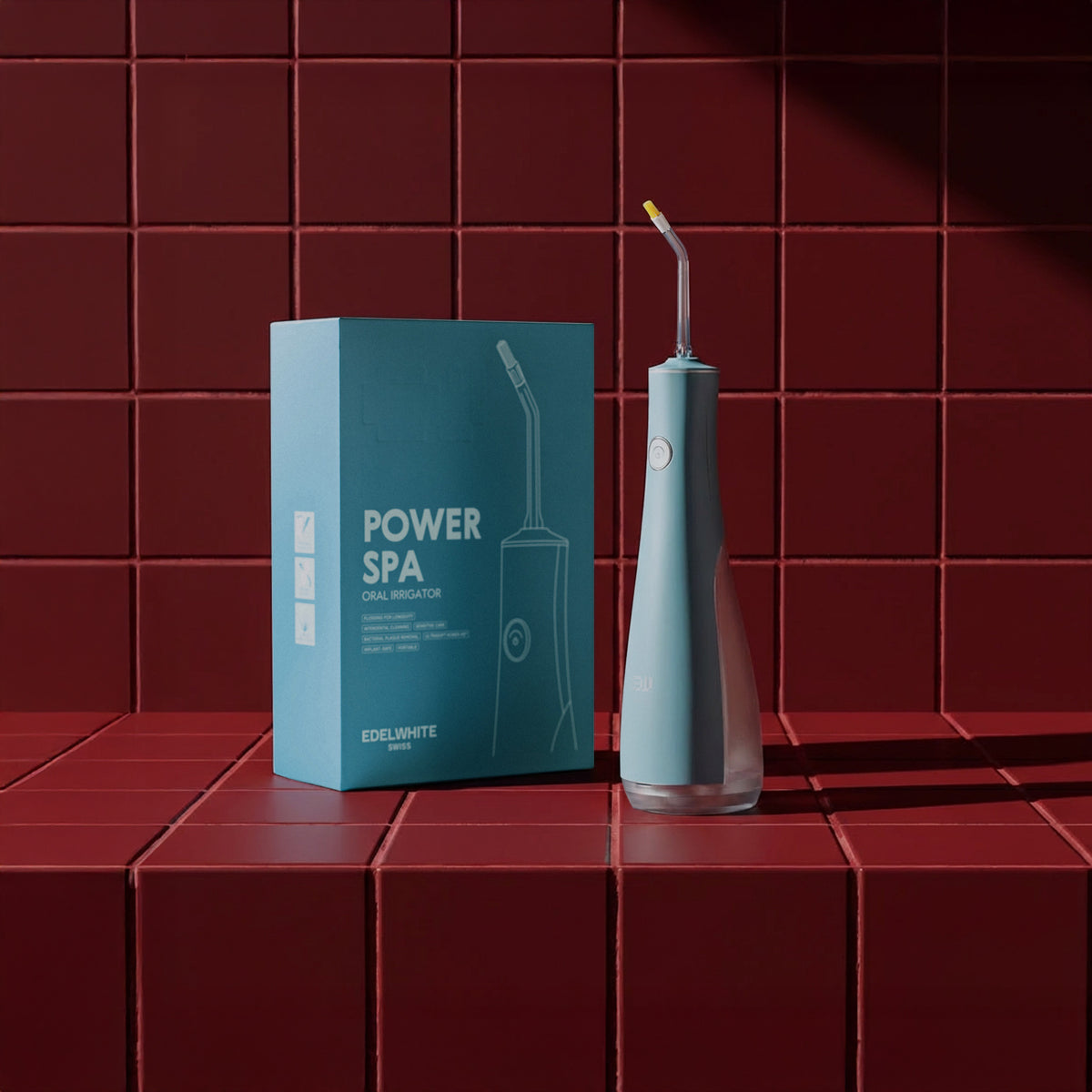
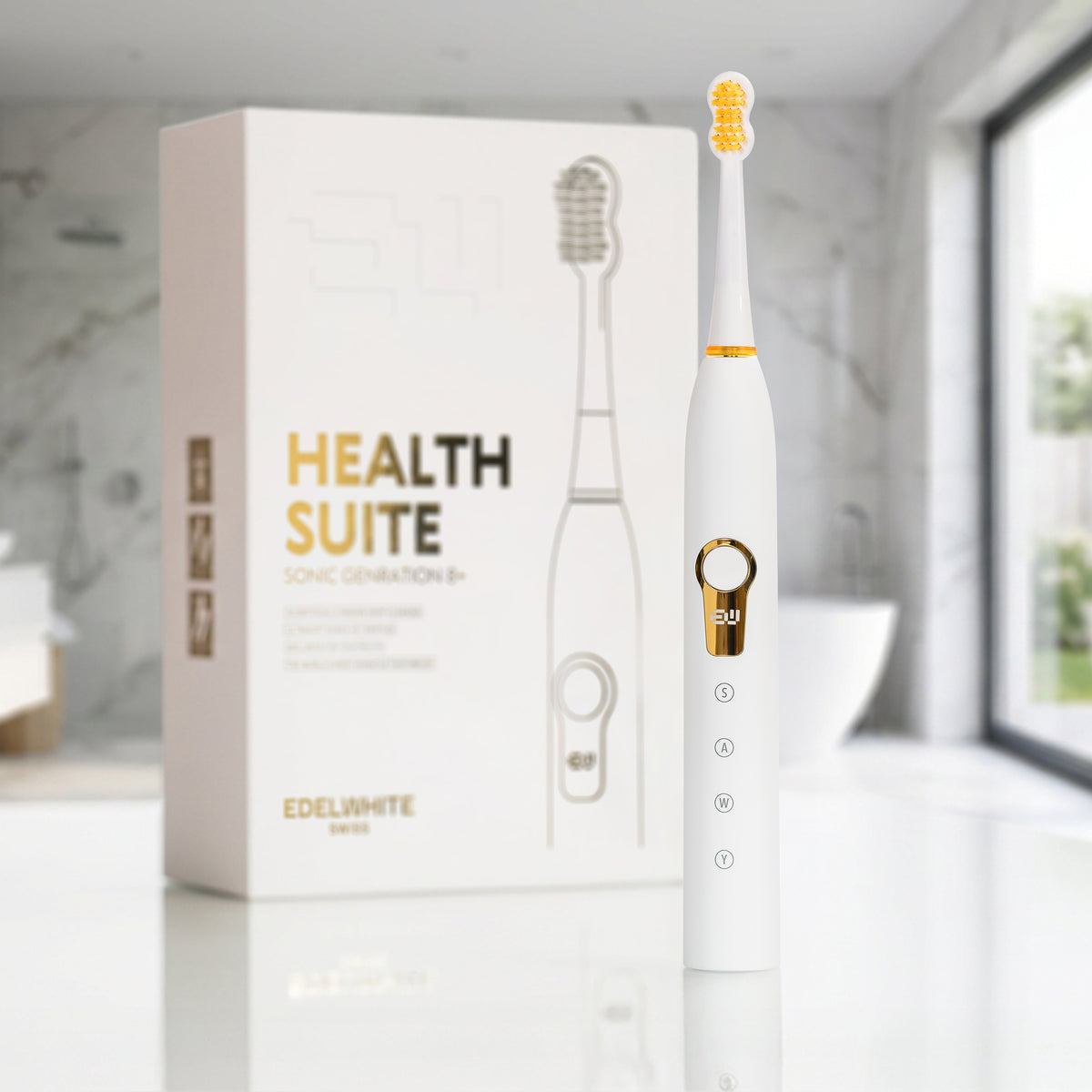
| EW-SG8+ Sonic Generation Health Suite with the Flosserpik Power Spa | A complete routine, at home and when travelling | Toothbrush: Sensitive, Active, Whitening and Yoga modes, a quadrant timer and a Target single-tuft head for the gumline. Water flosser: cordless and IPX7 waterproof, so you can use it in the shower, with four modes including Sensitive and Spot Clean. |
| EW-SG8+ Sonic Generation Health Suite with the Flosserpik Pro Station | A permanent spot in the bathroom | Water flosser: a 600 ml tank for a complete clean without refilling, and a pressure dial ranging from soft massage to deep cleaning. |
| EW-SG9 Viva with the Flosserpik Power Spa | Your first electric toothbrush | Toothbrush: three modes (Active, Sensitive and Massage), direct USB charging and three brush heads, including the Target head for the gumline. Water flosser: compact and cordless. |
Both water flossers come with a tip designed for periodontal pockets and a tongue cleaner, and the Pro Station also includes an orthodontic tip for braces. Remember to replace your toothbrush head every three months, or sooner if the bristles splay: you will find them in our replacement brush heads and tips collection.
Five mistakes that cancel out the benefits
- Using the water flosser instead of brushing: it does not remove plaque from tooth surfaces as well as a toothbrush.
- Starting at full pressure: begin on the lowest setting and increase gradually over two to three weeks.
- Pressing hard with your electric toothbrush: rest the head lightly against your teeth, angled towards the gums, and let the vibrations do the work.
- Skipping interdental brushes: a water flosser complements them; it does not replace them where they fit.
- Keeping the same brush head for too long: worn bristles clean less effectively and can irritate the gums.
Still choosing your toothbrush? Read our guide on how to choose the right electric toothbrush.
|
The EDELWHITE tip Our evening routine for healthy gums takes three steps: interdental brushes, your electric toothbrush, then your water flosser.
Explore the full range in our sonic toothbrushes and water flossers collections. |
Frequently asked questions
Can a water flosser replace an electric toothbrush?
No. A water flosser cleans between the teeth and along the gums, but it is your toothbrush that removes plaque from the tooth surfaces. Use it after brushing, never instead of it.
Can a water flosser replace dental floss or interdental brushes?
No, it complements them. Interdental brushes, or floss where the gaps are too tight, remove plaque between the teeth. The water flosser then flushes out bacteria and debris and reaches places they cannot, such as under bridges or around implants.
Should I use a water flosser before or after brushing?
After. Your electric toothbrush loosens plaque and breaks up the biofilm; the water flosser then works like a pressure washer, flushing out the bacteria still trapped between the teeth and under the gum. Interdental brushes come first.
How often should I use a water flosser?
Once a day is enough, ideally in the evening after brushing, or in the shower. Allow 60 to 90 seconds for your whole mouth. Using it twice a day brings no additional benefit.
Does a water flosser help with periodontitis?
It helps control gum inflammation, but it does not cure periodontitis. Only your dentist or periodontist can diagnose the disease and treat periodontal pockets. Used with the subgingival tip on the areas your dentist has identified, without forcing it, a water flosser makes daily cleaning easier between appointments.
Can I use a water flosser with dental implants?
Yes, and it is one of the situations where it helps most, because the area around implants is difficult to clean. Use low pressure and follow your implant dentist's instructions.
Is it normal for my gums to bleed when I start using a water flosser?
Light bleeding is common during the first few days if your gums are already inflamed. It usually decreases after one to two weeks of gentle, regular cleaning. If it continues for more than two weeks, see your dentist.
Can I put mouthwash in a water flosser?
Lukewarm water is all you need for daily use, and you can add an alcohol-free mouthwash. If your dentist has prescribed a solution, add it to the tank following their instructions. Avoid concentrated alcohol-based mouthwashes, and rinse the tank with clean water after each use.
Is an all-in-one toothbrush and water flosser better?
All-in-one units combine both devices on a single base. Two separate devices let you choose each one to suit your needs, take a cordless water flosser with you when travelling and replace one without changing the other. At EDELWHITE, our electric toothbrushes and water flossers are sold separately, so you can build the combination that suits you.
Further reading
- Periodontal pockets: how to clean where your toothbrush never reaches
- Gingivitis: symptoms, causes and how long it takes to heal
- Periodontitis: symptoms, stages, causes and treatment (the complete guide)
- Receding gums: how to clean deeply without making gum recession worse
- How to choose the right electric toothbrush
- What is the best electric toothbrush for preventing and combating periodontitis and gingivitis?
This article is for information only and does not replace the advice of a dentist or periodontist.